
Blog
5 Signs You May Have a Hidden Water Leak in Your Scituate, MA Home

Hidden water leaks can cause costly damage before you ever see a puddle. Learn how Scituate, MA homeowners can spot early warning signs such as water stains, damp areas, rising water bills, and musty odors.
Not every plumbing leak is easy to spot. While a dripping faucet or leaking pipe under a sink may be obvious, some leaks can develop behind walls, beneath floors, under cabinets, or in other concealed areas of your home.
A hidden water leak may go unnoticed for days or even weeks. During that time, it can waste water and gradually affect drywall, flooring, cabinets, and other parts of your home.
For homeowners in Scituate, Massachusetts, knowing the warning signs can help you investigate a potential problem before it becomes more extensive. Here are five signs that could indicate a hidden water leak and what you should do if you suspect one.
1. You Notice Water Stains on Walls or Ceilings
One of the most recognizable signs of a potential hidden leak is an unexplained stain on a wall or ceiling.
Water stains may appear as:
- Brown or yellow discoloration
- Dark spots
- Bubbling paint
- Peeling paint
- Swollen drywall
- Expanding patches of discoloration
Pay particular attention to areas underneath bathrooms, near plumbing fixtures, around pipes, or below rooms that use a significant amount of water.
However, the location of the stain does not necessarily tell you where the leak originates. Water can travel along framing, pipes, and other surfaces before becoming visible.
For example, a ceiling stain below a bathroom could come from a plumbing connection, fixture, shower area, or another source entirely. Simply painting over the stain won't solve the problem if moisture is still entering the structure.
What should you do?
If a stain continues to grow, returns after being cleaned or painted, or is accompanied by dampness or a musty smell, it's worth investigating the source.
2. Your Water Bill Suddenly Increases
An unexplained increase in your water bill can sometimes be an early warning sign of a plumbing leak.
Of course, a higher bill doesn't automatically mean you have a hidden leak. Your household may have used more water because of guests, seasonal activities, outdoor watering, laundry, or other changes.
But if your water usage hasn't changed and your bill is noticeably higher than usual, it's worth checking further.
One simple observation is to make sure faucets, showers, appliances, and other water fixtures are turned off and then check whether your water meter continues showing water usage. If water appears to be flowing when your household isn't using it, there may be an issue somewhere in the plumbing system.
A running toilet or leaking fixture can also waste water, so check visible plumbing fixtures before assuming the leak is hidden.
Why does this matter?
A small leak may not seem significant at first, but continuous water loss can add up over time. Finding the source early can help prevent unnecessary water waste and potential property damage.
3. You Find Damp or Musty Areas
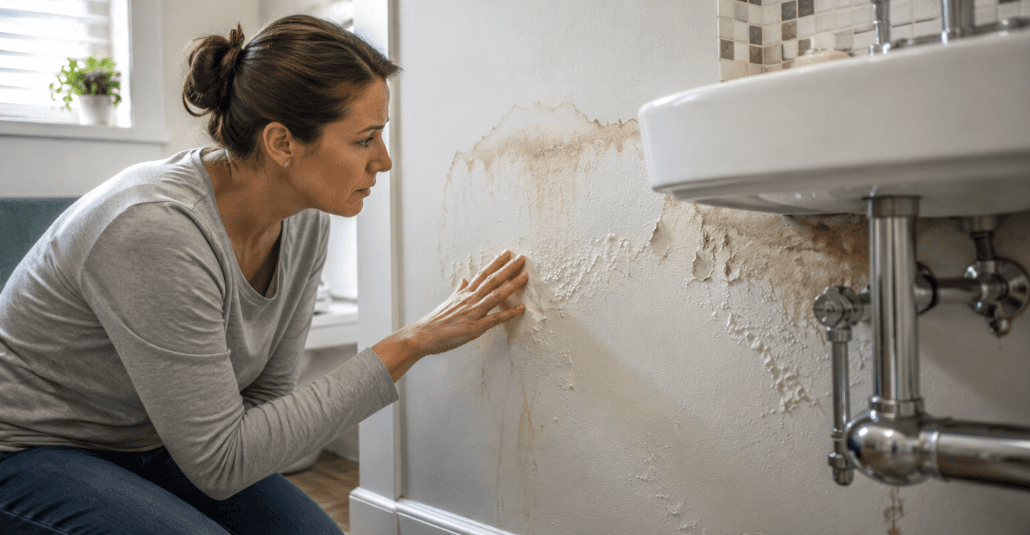
Persistent dampness is another warning sign that shouldn't be ignored.
Check areas such as:
- Under bathroom and kitchen sinks
- Inside cabinets
- Around toilets
- Near washing machines
- Around water heaters
- In basements
- Along walls or floors
- Near plumbing connections
A little moisture after normal household activity isn't necessarily concerning. For example, condensation around a cold pipe can occur under certain conditions.
The concern is unexplained or persistent moisture.
A musty odor can also indicate that an area has remained damp for an extended period. If a particular part of your home consistently smells damp even though you can't see a source of water, there may be moisture hidden behind a wall, beneath flooring, or inside a cabinet.
4. Paint, Drywall, or Flooring Starts Changing
Water doesn't always appear as a visible puddle. Sometimes the building materials around a leak provide the first clue.
You may notice:
- Peeling or bubbling paint
- Warped drywall
- Swollen baseboards
- Buckling flooring
- Soft spots
- Wallpaper pulling away from a wall
- Cracks or deterioration around a plumbing area
These symptoms don't automatically prove that you have a plumbing leak. Condensation, roof problems, exterior water intrusion, and other moisture sources can create similar damage.
However, if the problem is near a bathroom, kitchen, laundry area, water heater, or visible plumbing line, a plumbing leak should be considered.
The longer moisture remains in building materials, the greater the potential for deterioration and other problems.
5. You Hear Water When No Fixture Is Running
Sometimes your ears can detect a plumbing problem before your eyes do.
If you hear dripping, hissing, or the sound of running water when all faucets and fixtures are turned off, investigate further.
You may also hear:
- Water moving inside a wall
- Pipes making unusual sounds
- A toilet repeatedly refilling
- Dripping beneath a floor or ceiling
- Water running intermittently without an obvious source
A running toilet or dripping faucet can account for some unexplained water usage, but sounds coming from concealed areas may require further investigation.
Don't automatically assume that every plumbing sound means you have a hidden leak. However, unexplained sounds combined with water stains, dampness, or higher water usage are stronger reasons to have the plumbing system checked.
Where Do Hidden Water Leaks Commonly Occur?
Hidden leaks can develop in many parts of a home's plumbing system.
Common locations include:
- Behind walls
- Beneath floors
- Under kitchen and bathroom cabinets
- Around showers and tubs
- Near toilets
- Around washing machine connections
- Near water heaters
- In basement plumbing
- Along concealed water supply lines
One important thing to remember is that the place where you see water isn't necessarily where the leak started.
Water can travel through building materials before appearing as a stain, damp spot, or puddle. This is one reason why finding the underlying source is important.
What Causes Hidden Water Leaks?
Several plumbing problems can contribute to concealed leaks.
Common causes include:
Aging Pipes
Older plumbing components can deteriorate over time. Corrosion, wear, and material degradation may eventually result in leaks.
Loose Connections
Connections between pipes and fixtures can become loose or develop problems over time, allowing water to escape.
Damaged Seals
Worn or damaged seals around fixtures and plumbing connections can allow water to seep into surrounding areas.
Excessive Water Pressure
Water pressure that is consistently too high can place additional stress on plumbing components and connections.
Worn Supply Lines
Flexible supply lines used for fixtures and appliances can deteriorate and eventually develop leaks.
Why You Shouldn't Ignore a Hidden Water Leak
It can be tempting to ignore a small stain or slightly higher water bill, particularly when everything appears to be working normally.
However, a hidden leak can continue even when you can't see it.
Depending on its location and severity, ongoing moisture may contribute to:
- Increasing water bills
- Damaged drywall
- Warped or damaged flooring
- Cabinet damage
- Deterioration of wood materials
- Persistent dampness
- Musty odors
- Mold growth
- More extensive plumbing repairs
This doesn't mean every water stain indicates a major plumbing problem. The important point is to determine what's causing the moisture rather than simply covering the visible symptom.
What Can Homeowners Safely Check?
If you suspect a hidden leak, there are several basic observations you can make without taking apart your plumbing.
Start by checking visible plumbing areas.
Look under sinks, around toilets, near appliances, and around water heaters for signs of moisture. Check whether any toilets are continuously running and look for unexplained stains or damp areas.
You can also pay attention to your water usage. If all fixtures are turned off but your home appears to be using water, further investigation may be appropriate.
Listen for unexplained dripping or running-water sounds, particularly during quiet periods.
However, avoid cutting into walls, removing flooring, or dismantling plumbing simply to search for a leak. Those steps can cause additional damage and may not reveal the actual source.
When Should You Call a Professional for Leak Detection?
If you can see exactly where a pipe or connection is leaking, the problem may be relatively straightforward to identify. Hidden leaks are different.
Consider professional help if:
- A water stain keeps returning
- Your water bill remains unusually high
- You notice persistent dampness
- You smell a musty odor without an obvious cause
- Water appears to be coming from a wall or ceiling
- You hear unexplained water sounds
- Multiple warning signs occur together
- You cannot identify the source of the moisture
- The problem appears to be getting worse
If you're searching for a water leak detection company near me, focus on finding professional help that can identify the underlying source rather than simply addressing the visible water.
Similarly, homeowners searching for leak detection and repair should look for a solution that addresses both the cause and the resulting plumbing problem when a leak is confirmed.
How Scituate Plumbing Can Help
Finding a hidden leak isn't always as simple as locating a visible puddle. Water can travel from the original leak location before appearing somewhere else in the home.
Scituate Plumbing can help homeowners in Scituate investigate suspected plumbing leaks and determine the appropriate next step. If you're dealing with unexplained water stains, persistent dampness, unusual water usage, or other warning signs, professional plumbing assistance can help identify whether a plumbing issue is responsible.
Addressing the underlying problem is important. Repairing only the visible stain or drying an affected area won't prevent additional damage if water continues to escape from the plumbing system.
For homeowners in Scituate looking for a water leak detection company or leak detection and repair near me, getting the source properly assessed can provide a clearer understanding of the problem and the repair that may be needed.
Frequently Asked Questions
What are the first signs of a hidden water leak?
Common warning signs include unexplained water stains, unusually high water bills, persistent dampness, musty odors, bubbling paint, warped flooring, and unexplained sounds of dripping or running water.
Can a higher water bill indicate a hidden leak?
Yes, an unexplained increase in water usage can be a sign of a leak. However, increased household use, outdoor watering, running toilets, and other factors can also raise your bill. Look for other warning signs before assuming a hidden leak is responsible.
How do I know if water is leaking behind a wall?
Water stains, bubbling or peeling paint, warped drywall, musty odors, and unexplained dampness can indicate moisture behind a wall. You may also hear dripping or running water when no fixtures are being used.
Can a small hidden leak cause serious damage?
It can. Even a small leak that continues over an extended period can keep surrounding materials damp and potentially damage drywall, flooring, cabinets, or other parts of the home. Early investigation can help identify the source before the problem becomes more extensive.
Where are hidden plumbing leaks commonly found?
Hidden leaks can occur behind walls, beneath floors, under cabinets, around bathrooms, near toilets and washing machines, around water heaters, and along concealed supply lines.
How do professionals find hidden water leaks?
Professionals start by evaluating visible symptoms and the home's plumbing system to determine where water may be escaping. The approach depends on the location and type of suspected leak. The goal is to identify the underlying source rather than simply treating visible water damage.
When should I search for a water leak detection company near me?
Consider professional leak detection when you have unexplained water stains, persistent dampness, an unusually high water bill, recurring moisture, or signs of water coming from a wall, ceiling, or floor without an obvious source.
Don't Ignore the Warning Signs
A hidden water leak doesn't always announce itself with a puddle on the floor. Sometimes the first clue is a water stain, a musty smell, a higher-than-usual bill, or a strange sound coming from behind a wall.
One sign alone may not prove that you have a plumbing leak. But when several warning signs appear together, it's worth investigating the source.
For homeowners in Scituate, Scituate Plumbing can help assess suspected plumbing leaks and determine the appropriate next step. Identifying a problem early can help limit water waste, protect your home, and prevent a manageable plumbing issue from developing into a larger one.
Need help in Scituate? Request a free estimate.